Solutions · Legislative and Board Management
Agenda and meeting management for councils, boards, and commissions.
Intake, legislative files, agendas, meetings, votes, and the public record for city councils, county boards, school boards, and every commission that votes in public.
The Platform
Legislative management system
Intake & Routing
Departments, boards, and commissions submit reports, resolutions, and supporting documents through structured portals built for their own submission types — and see live status the whole way: received, in review, filed. Everything that arrives routes to the right legislative file, with the filing suggested automatically and a human reviewing every decision.
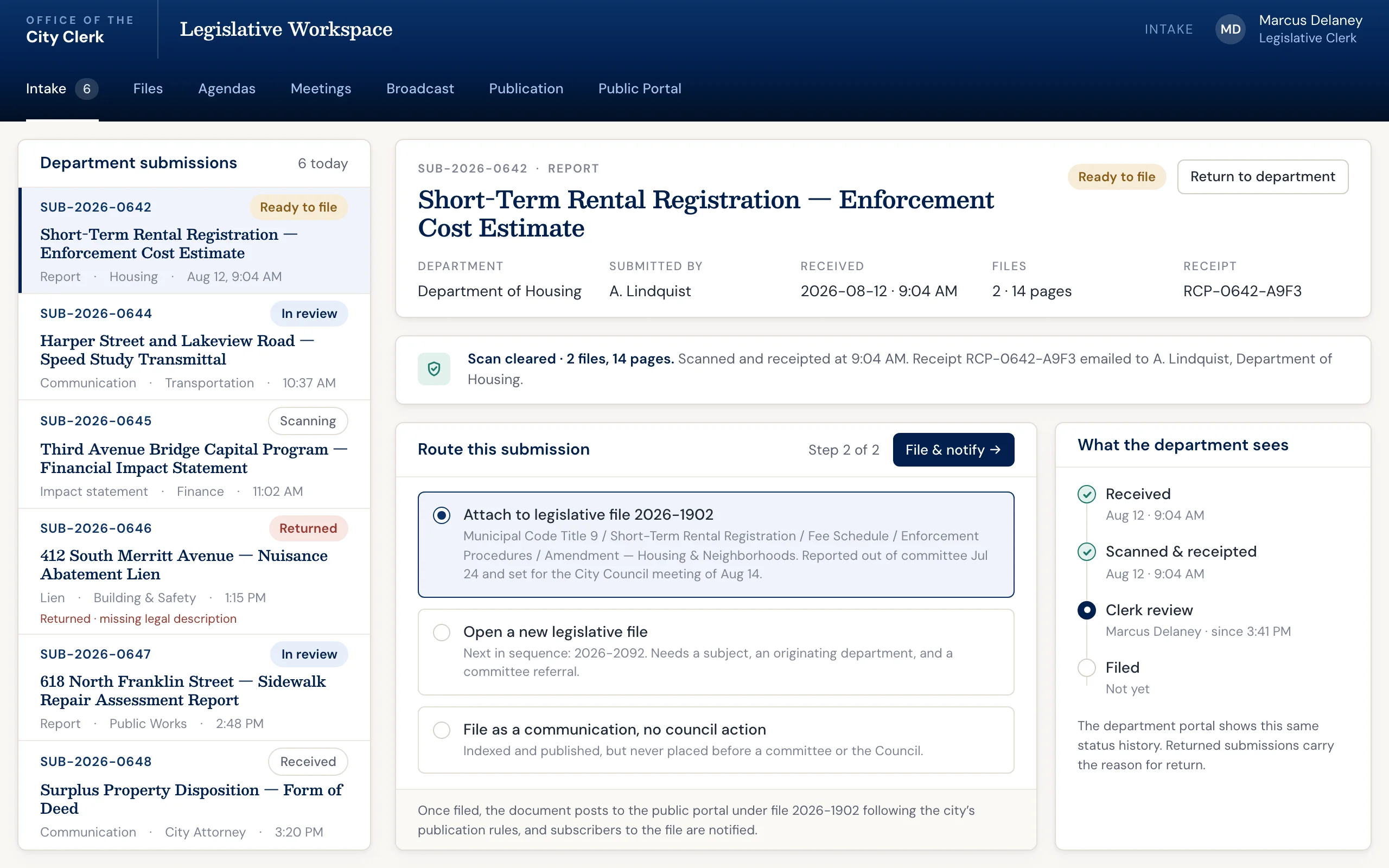
Legislative Files
Every matter is one living record: the file collects documents, referrals, committee reports, votes, and public comment from first submission to final action. The record isn’t assembled after the fact — the complete history of a matter is there the moment it changes, for staff and residents alike.
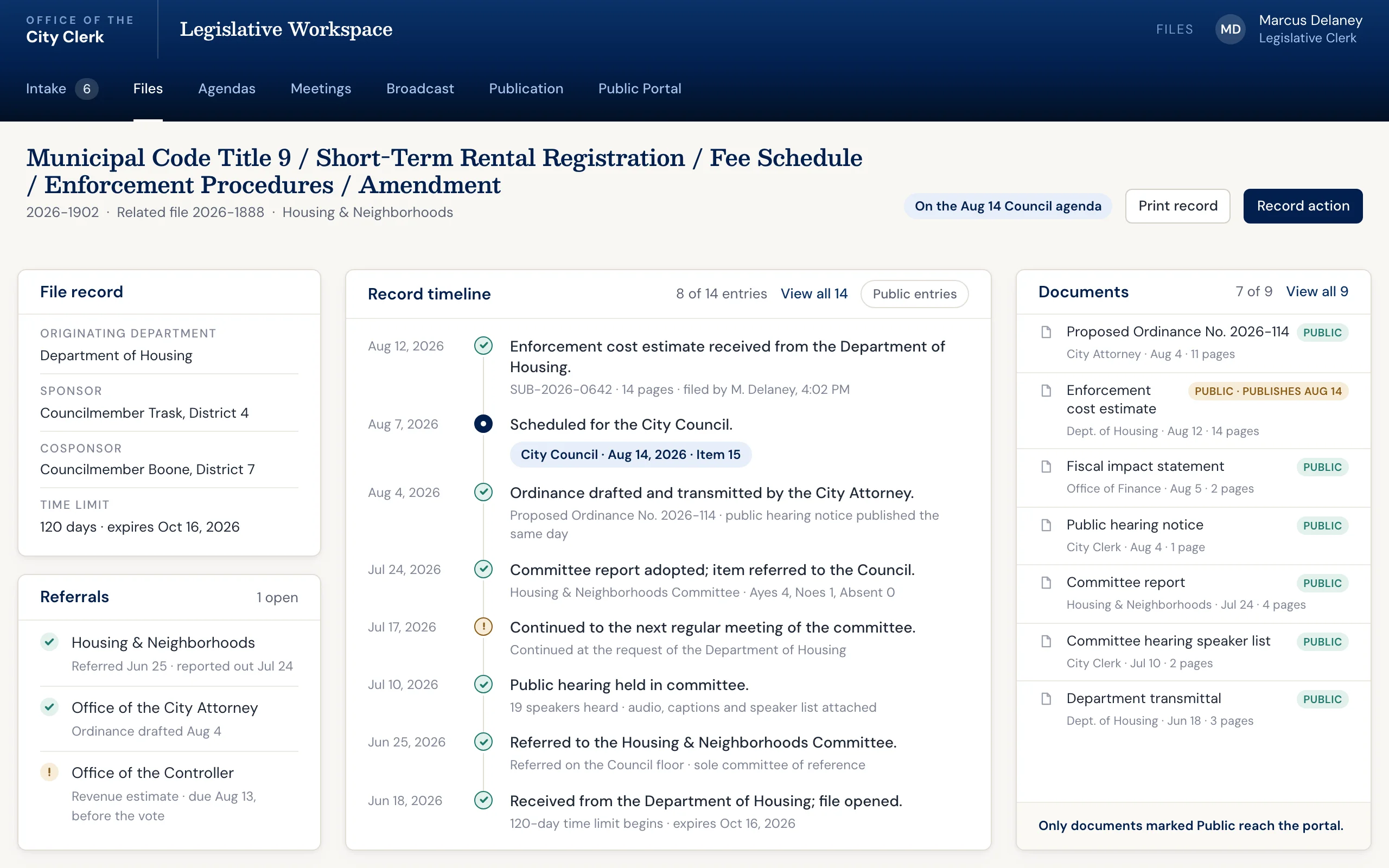
Agenda Management
Council and board agendas assemble from files your staff have already worked: draft an item before its meeting exists, drop it on when it’s ready, and let templates enforce your format and pre-populate standard language. Open-meeting-law posting warnings and multi-reviewer approval run before anything publishes — for the governing body and every committee alike.
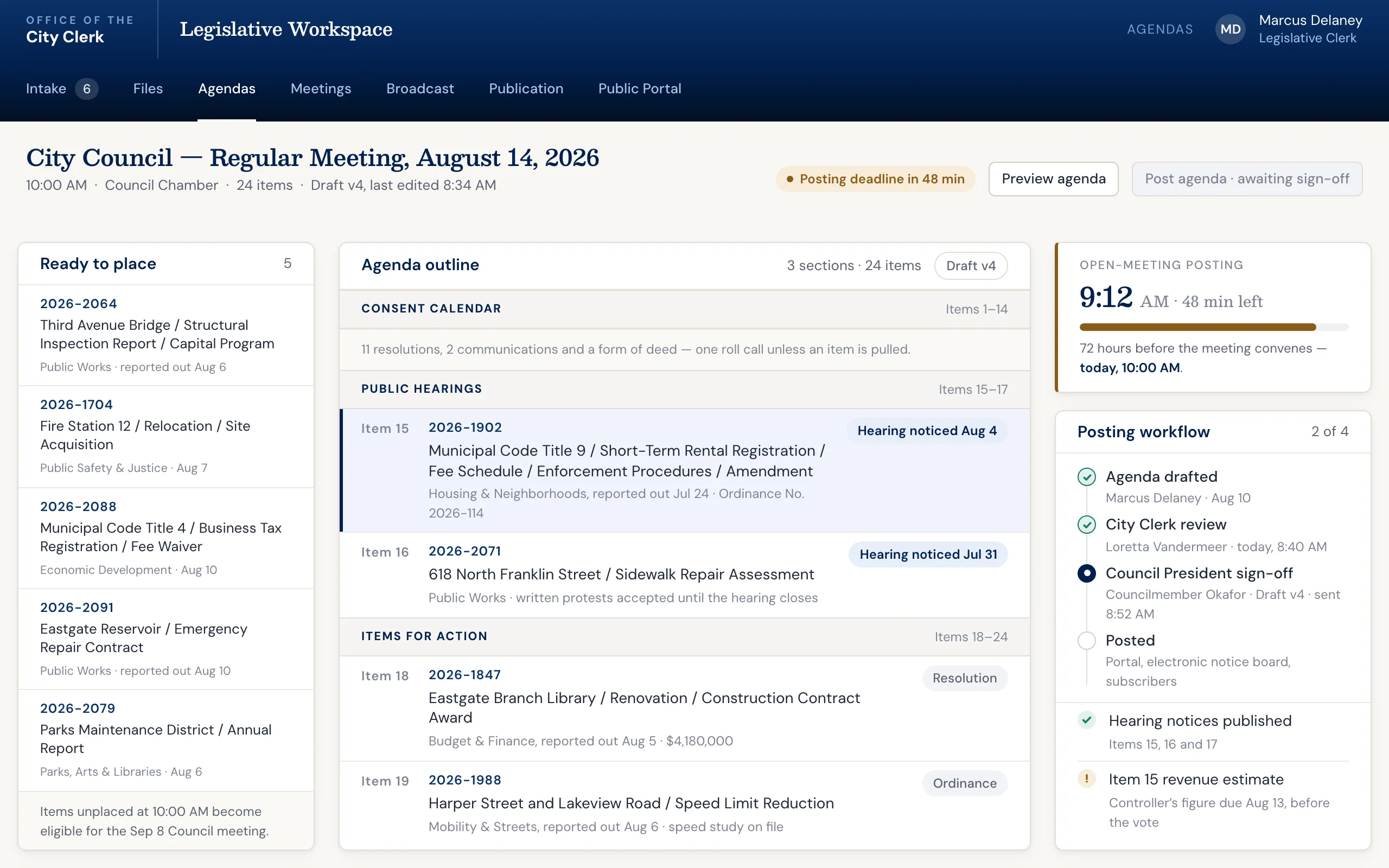
Meeting Management
Run the council or board meeting from a console or a tablet: the current item, the motion on the floor, speaker and debate timers, and quorum in one view, synced live to the chamber displays. Presiding officers, clerks, and operators each get the view their seat needs — all of it driven by the agenda you just published, not a copy of it.
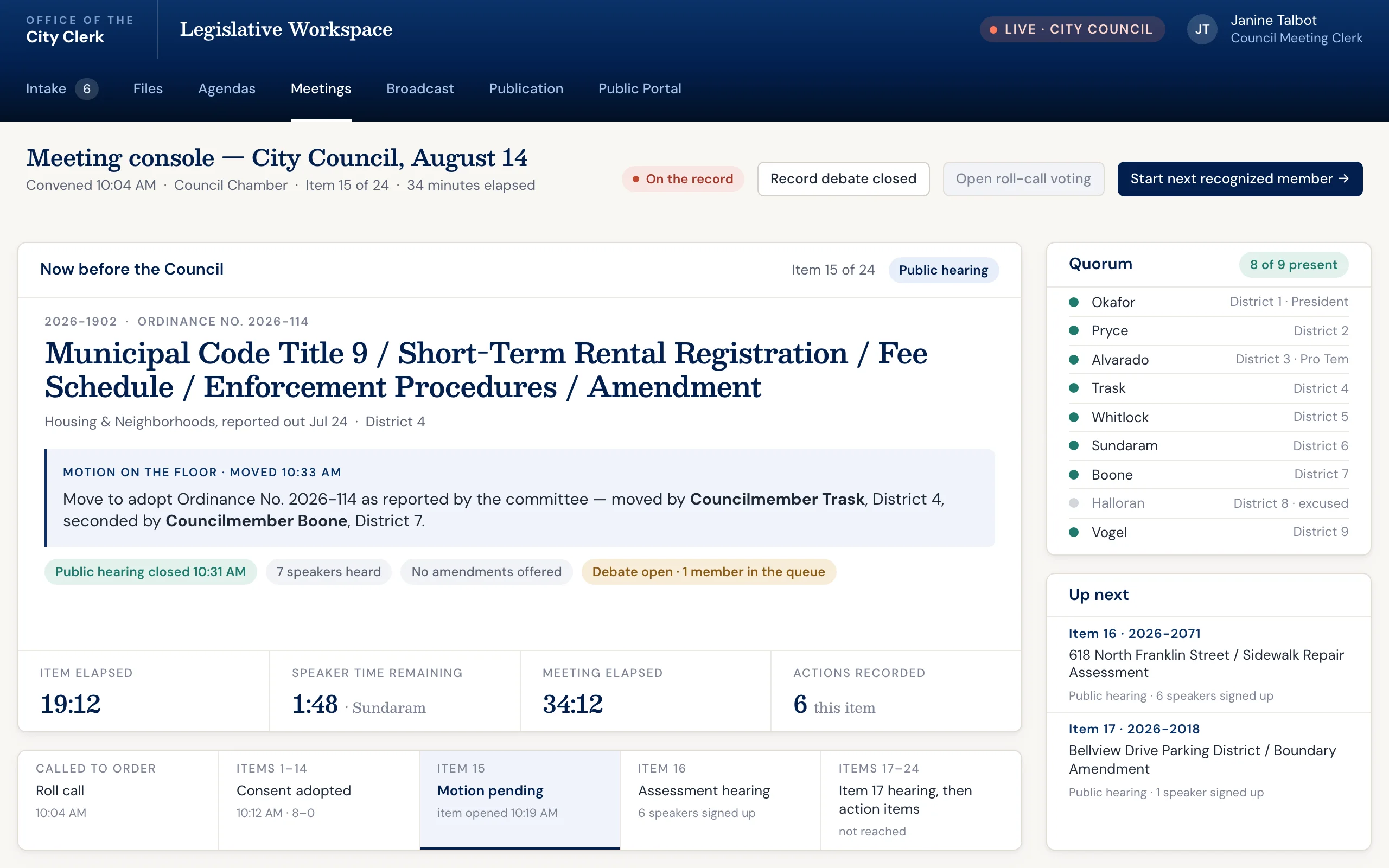
Public Speakers
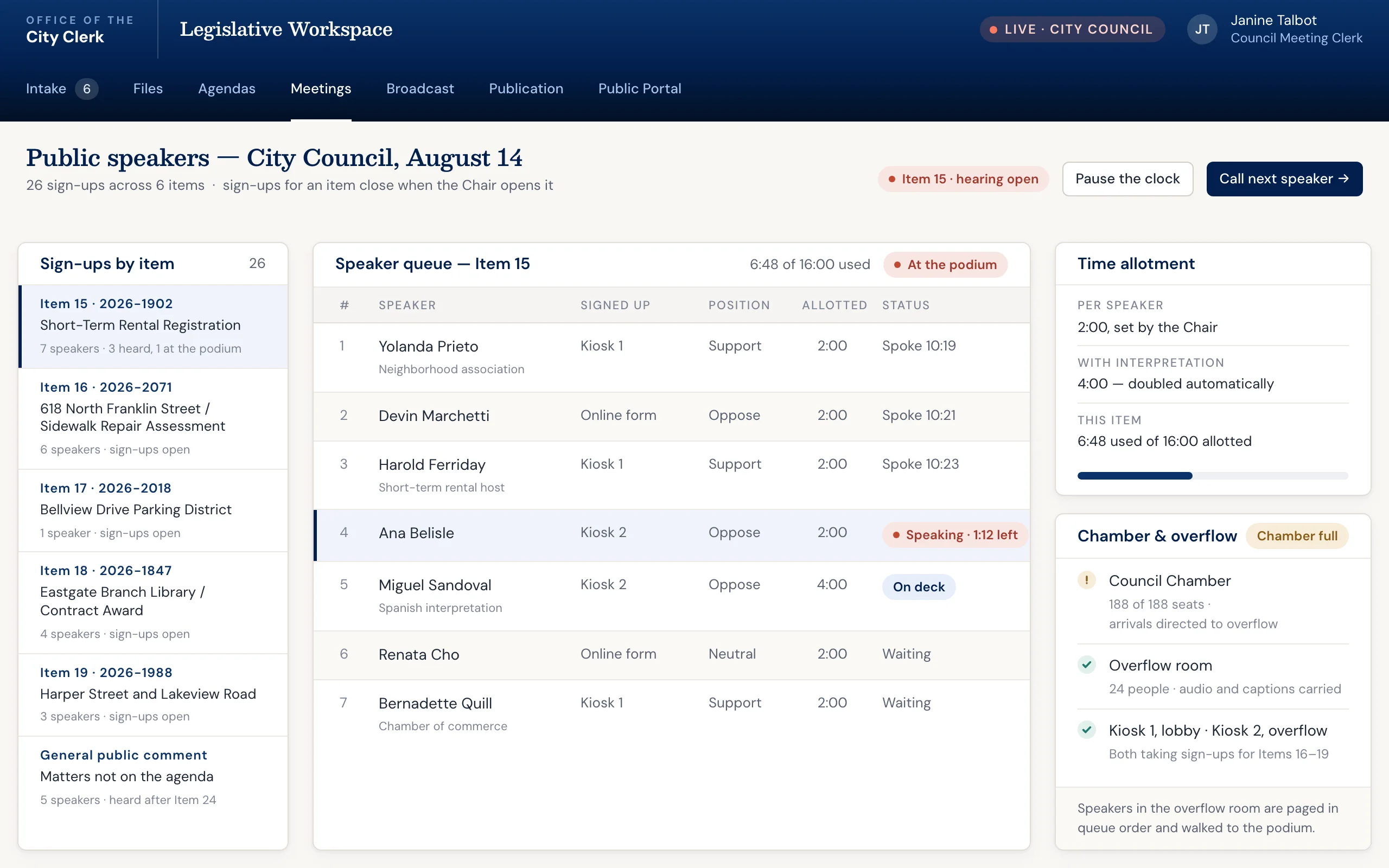
Residents sign up at kiosks in the chamber against the agenda that was actually published, so every card in the queue is tied to the item it belongs to. Operators call speakers in order, set and run allotted times, and hand the floor over cleanly — and every speaker lands in the meeting record without a separate log.
Voting & Roll Call
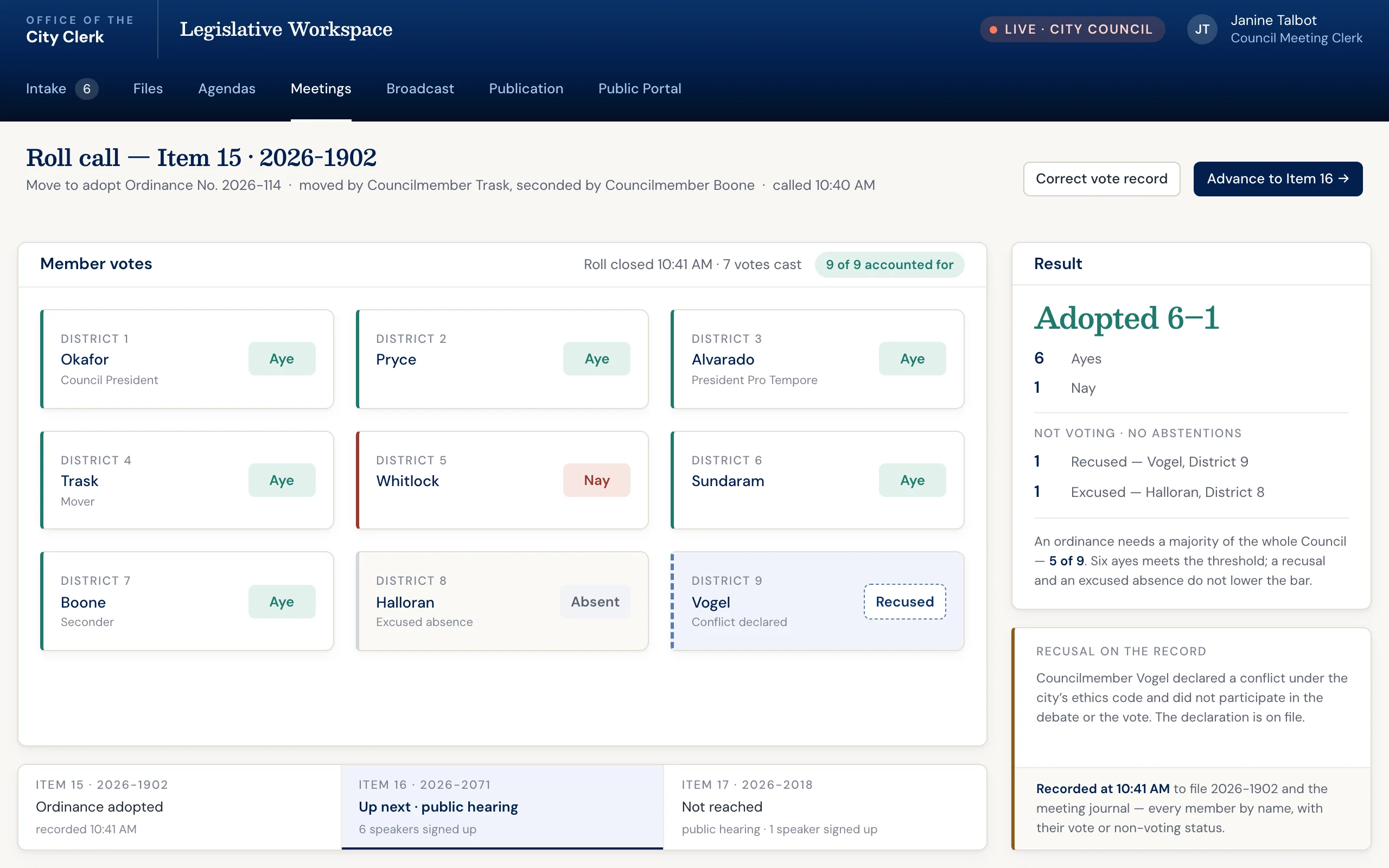
Members vote from their desks, in committee and in full session, and the tally records straight onto the legislative file — no one retypes a roll call after the meeting. The outcome then drives what happens next, so the vote is both the record and the trigger for the work that follows it.
Streaming & Broadcast
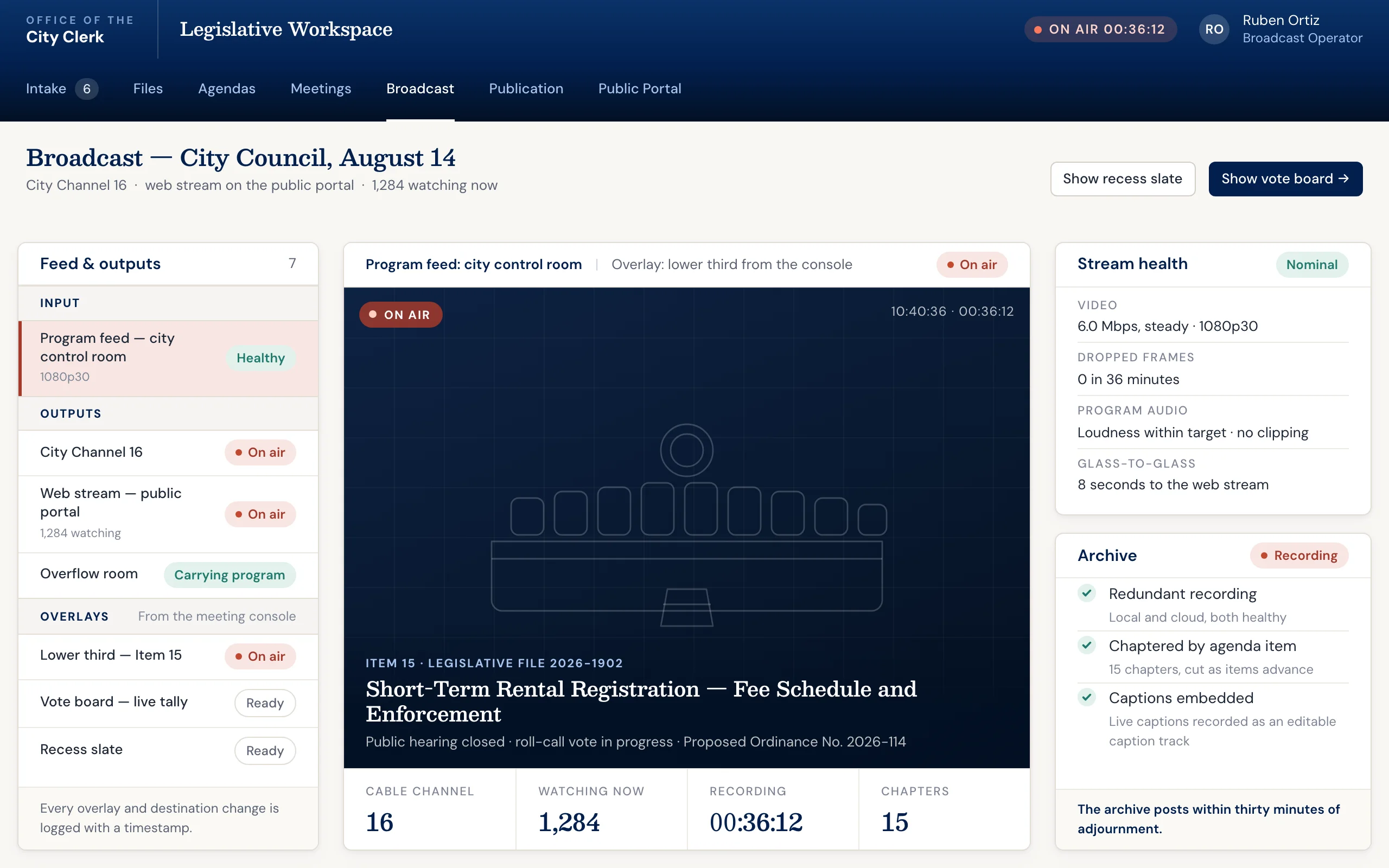
Meetings go out live to your broadcast channel and to the web at the same time, from the same platform that is running the meeting in the room. Recordings are archived against the agenda item they belong to, so a resident jumps straight to the matter they care about instead of scrubbing three hours of video.
Captions & Translation
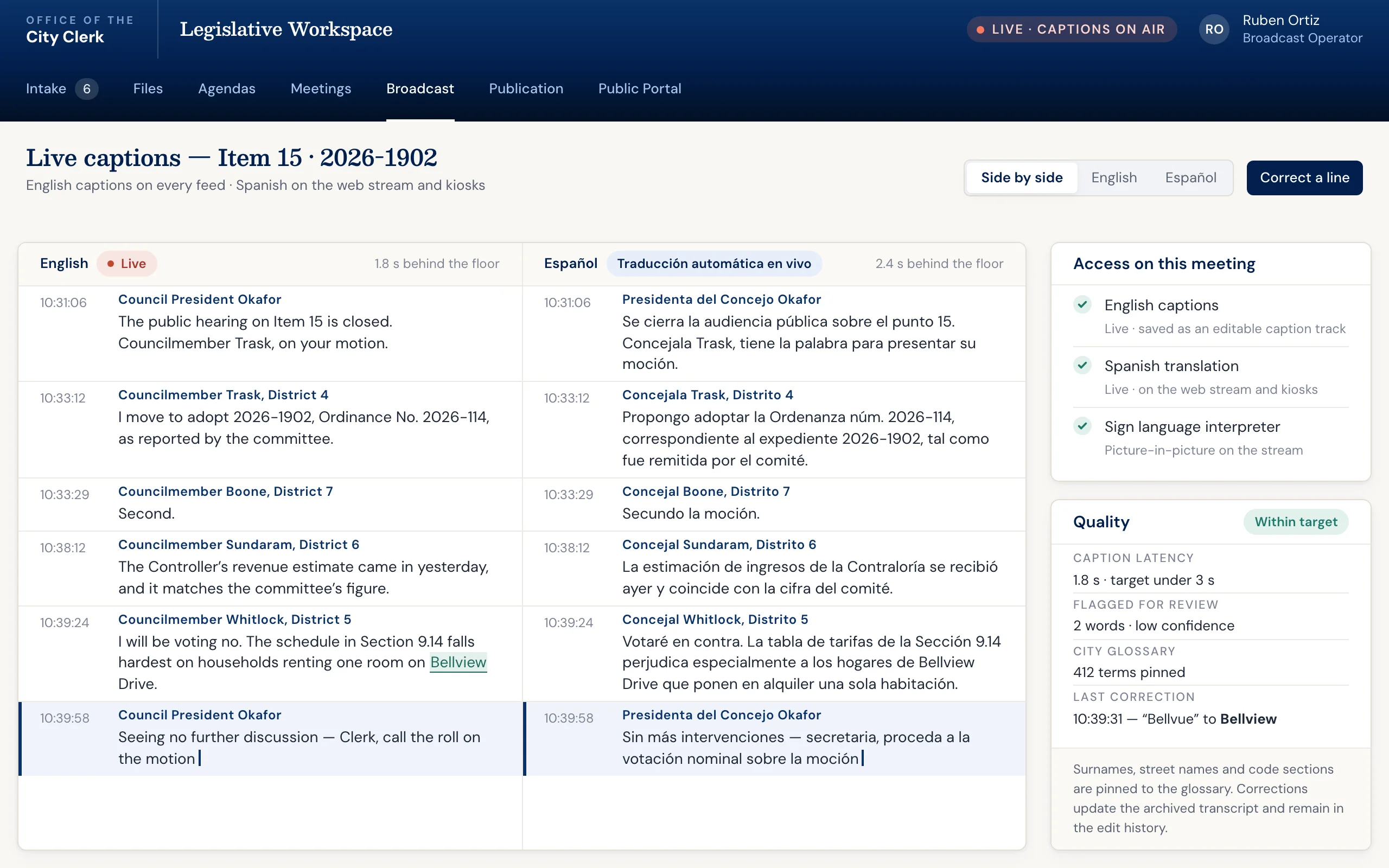
Captions run live during the meeting with speaker attribution, in multiple languages, so residents can follow proceedings as they happen rather than waiting for minutes. Accessibility is part of the platform, not a separate vendor bolted onto the chamber — and the captions stay with the archived recording afterward.
Post-Meeting Workflows
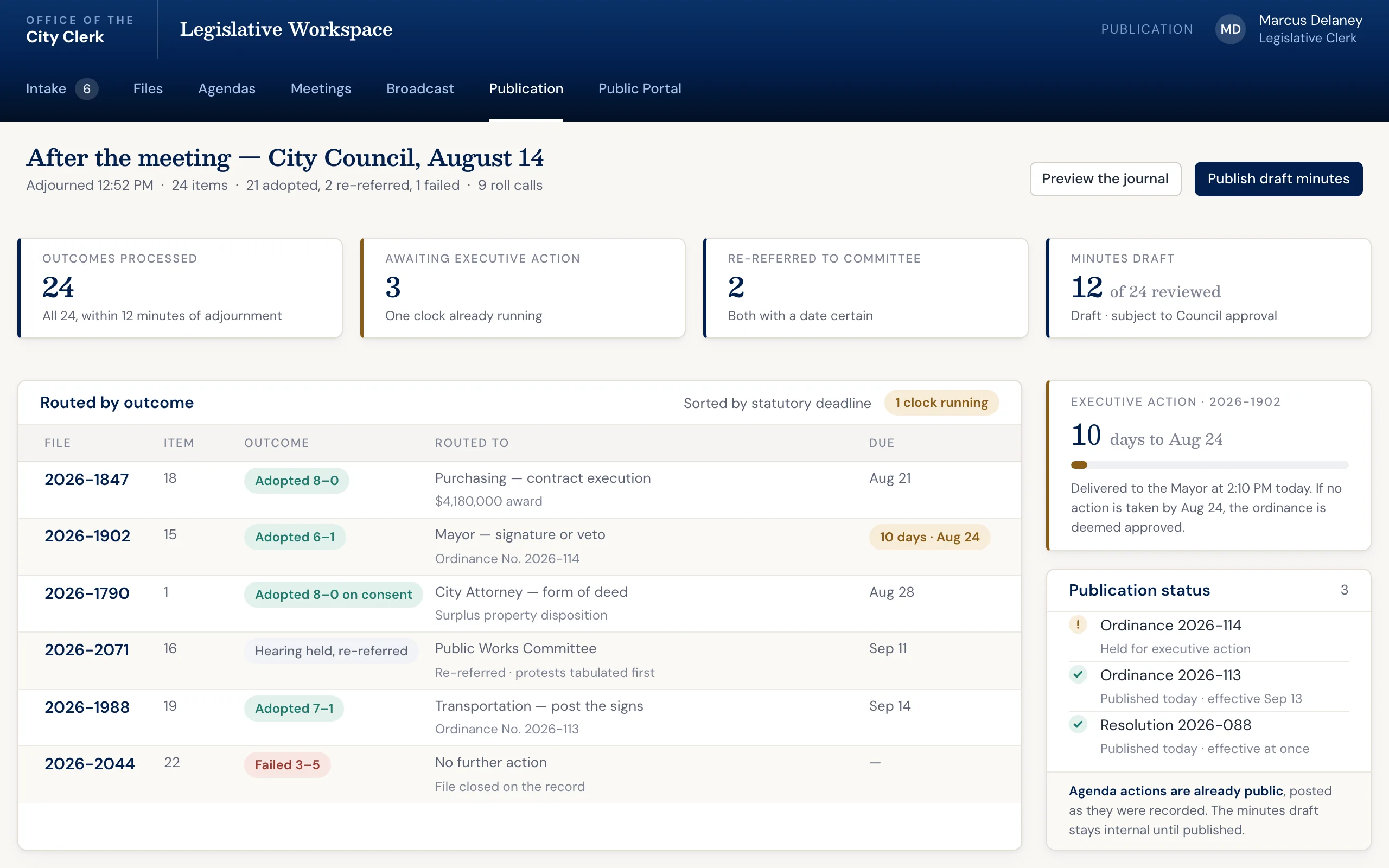
The moment a meeting ends, each outcome routes by rule — to the mayor or executive for signature where required, with the statutory window tracked; to publication as an ordinance or resolution; to the record as noted and filed. Minutes, speaker logs, and the public record are produced from what already happened in the system, not re-typed from notes.
Public Portal
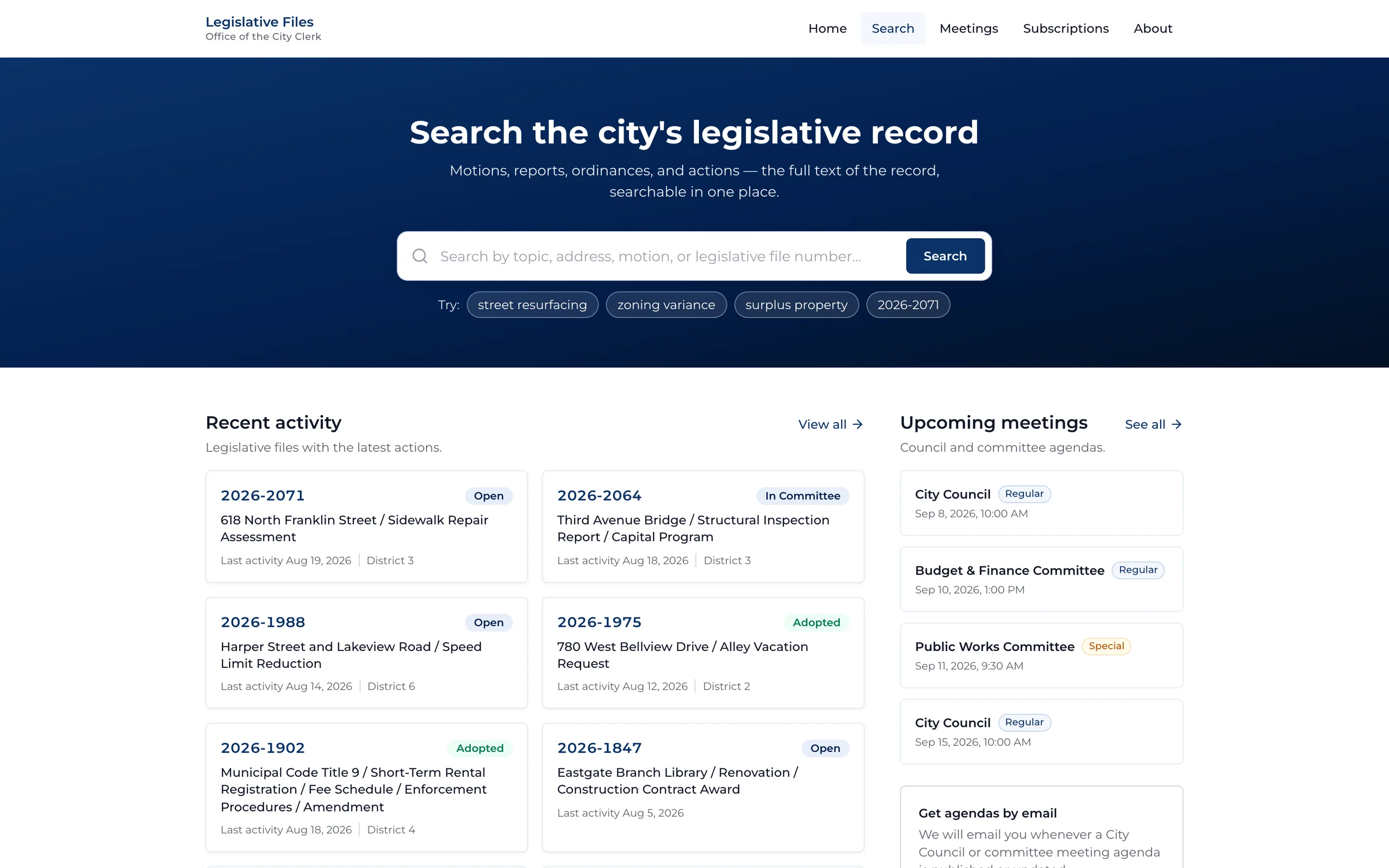
Residents search the full record in plain language — no file numbers or legal terminology required — and filter by district, body, year, and committee to see exactly what affects their neighborhood. They subscribe to the files, committees, and agendas they care about, and public comment attaches to the file it is about, on the record.
Proof, at scale
One of the biggest cities in the country runs its council on Concourse.
Its clerks replaced a patchwork of separate systems with one legislative platform. Citywide intake, council files, agendas, speakers, voting, captioning, and streaming now sit on the same record.
Read the case studySee your agency running on it before you buy it.
Concourse doesn’t sell you a demo of someone else’s government. We build a working prototype configured to your process and iterate with you until it fits.
A working prototype
Our platform, configured to your process.
Refined with your team
You react and we adjust until it fits how your staff works.
No implementation fees
We don’t charge until you go live.
Live in months, not years
No-code configuration your own staff can change.
Legislative and Board Management
Every file, every vote. One system.
Schedule 30 minutes with our team and see what your legislative process looks like when the file, the meeting, and the public record are one platform.